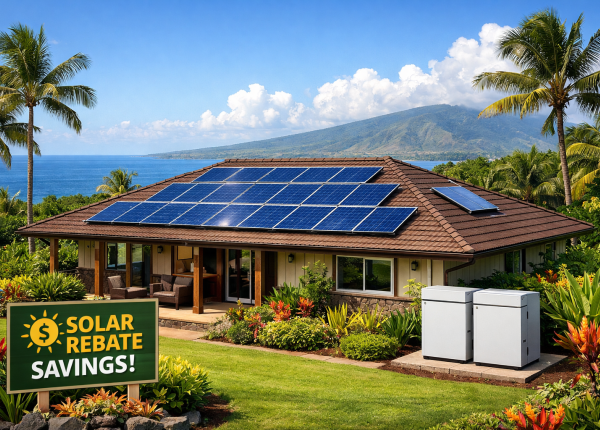
Thin Film vs Monocrystalline Solar Panels: Choosing the Right Technology for Hawaii
When deciding between thin film vs monocrystalline solar panels, efficiency numbers alone do not tell the full story. Hawaii’s climate, roof space limitations, high electricity costs, and salt-air exposure all play a major role in determining which solar technology delivers the best long-term value.
Many homeowners assume solar panels are interchangeable. In reality, the type of panel you choose affects how much power your system produces, how much roof space it uses, how long it lasts, and how quickly it pays for itself. Selecting the wrong technology can mean lower output, wasted space, or a slower return on investment.
This guide breaks down thin film vs monocrystalline solar panels in clear, practical terms. You’ll learn how each technology works, how they compare in real-world conditions, and which option typically makes more sense for residential and commercial systems in Hawaii.
Understanding Solar Panel Technologies
Before comparing performance, it helps to understand what separates these panel types at a technical level.
What Are Monocrystalline Solar Panels?
Monocrystalline solar panels are made from a single, continuous crystal of silicon. This uniform structure allows electrons to move more efficiently, which results in higher energy production per panel. These panels are easy to recognize by their dark, uniform appearance.
They are a type of crystalline silicon solar panels, which also includes polycrystalline panels. Among crystalline options, monocrystalline panels offer the highest efficiency and are the most common choice for residential rooftops.
What Are Thin Film Solar Panels?
Thin film solar panels are produced by layering photovoltaic material onto a surface such as glass, metal, or plastic. These layers are extremely thin, which makes the panels lighter and sometimes flexible.
You may also hear thin film referred to as amorphous vs crystalline solar panels, since thin film does not rely on crystalline silicon structure in the same way.
Thin film solar modules are often used in large commercial installations or specialty applications where weight, flexibility, or aesthetics are priorities.
Thin Film vs Monocrystalline: Key Differences
The differences between thin film and monocrystalline panels become most noticeable when comparing efficiency, space requirements, durability, and long-term output.
Efficiency and Energy Output
Efficiency is one of the most important factors in a photovoltaic panels comparison.
- Monocrystalline silicon solar panels have the highest efficiency, meaning they produce more electricity per square foot.
- Thin film panels have lower efficiency and require significantly more surface area to generate the same amount of power.
In Hawaii, where roof space is often limited, higher efficiency usually translates to better system performance.
Roof Space and System Size
Because thin film panels produce less power per panel, larger systems are required to meet household energy needs. This can be a challenge for residential rooftops.
Monocrystalline panels allow homeowners to:
- Maximize output on smaller roofs
- Reduce the total number of panels needed
- Simplify system design and installation
For most homes, roof space limitations favor monocrystalline technology.
Performance in Heat and Partial Shade
Thin film panels generally handle high temperatures slightly better and can be more tolerant of partial shading. However, modern monocrystalline panels are engineered to perform efficiently in warm climates and direct sunlight.
In Hawaii’s consistently sunny environment, the efficiency advantage of monocrystalline panels typically outweighs thin film’s marginal heat tolerance.
Durability and Lifespan
Durability is a major consideration for long-term solar investments.
- Monocrystalline panels commonly last 25 to 30 years and come with strong performance warranties.
- Thin film panels usually have shorter lifespans and lower long-term output guarantees.
Salt air, wind, and UV exposure make durability especially important in Hawaii.
Thin Film vs Monocrystalline vs Other Panel Types
Some homeowners also compare monocrystalline vs polycrystalline solar panels. While polycrystalline panels cost slightly less, they are less efficient and have largely been replaced by monocrystalline options in residential installations.
When comparing solar module vs solar panel, it’s worth noting that these terms are often used interchangeably. Technically, a solar module refers to a single panel, while a solar panel system includes multiple modules connected together.
Cost Comparison: Thin Film vs Monocrystalline Solar Panels
Upfront price can be misleading if viewed in isolation.
Thin film panels often cost less per panel, but because more panels are required, total system costs can increase due to:
- Additional mounting hardware
- Larger installation footprint
- More labor and wiring
Monocrystalline panels cost more per panel but usually result in:
- Smaller system size
- Higher lifetime energy production
- Better long-term return on investment
When electricity rates, incentives, and lifespan are considered, monocrystalline systems often provide greater overall value in Hawaii.
Which Solar Panel Type Works Best in Hawaii?
Hawaii’s environment strongly influences which technology performs best.
Residential Homes
Most residential systems benefit from monocrystalline panels because:
- Roof space is limited
- Electricity costs are high
- Maximum output per panel is critical
Monocrystalline panels are commonly paired with modern photovoltaic systems to deliver high performance on compact rooftops.
Commercial and Large-Scale Installations
Thin film panels may be suitable for large commercial rooftops or ground-mounted systems where space is abundant and weight or flexibility matters more than efficiency.
Battery Storage Integration
High-efficiency systems pair better with energy storage. Monocrystalline panels integrate more effectively with PV storage solutions, allowing homeowners to store more energy in smaller battery systems.
Common Mistakes When Comparing Solar Panel Technologies
Many homeowners make avoidable mistakes when comparing panel options.
- Focusing only on upfront panel price
- Ignoring roof size and layout constraints
- Overlooking warranty and degradation rates
- Applying mainland recommendations to Hawaii conditions
Working with a local expert ensures your system is designed for Hawaii’s climate and utility structure.
Designing a Complete Energy System
Solar panels are only one part of a complete energy solution. Many homeowners combine solar with:
- Energy-efficient air conditioning
- Solar water heating
- Electric vehicle charging
- Roofing and electrical services to support system upgrades
Understanding the solar installation timeline in Hawaii also helps homeowners plan effectively.
Final Thoughts: Thin Film vs Monocrystalline in Hawaii
When evaluating thin film vs monocrystalline solar panels, the right choice depends on efficiency needs, available space, and long-term goals. In Hawaii’s high-cost energy environment, performance and durability matter more than small differences in upfront pricing.
For most homeowners and many businesses, monocrystalline panels offer higher output, better roof utilization, longer lifespan, and stronger financial returns. Thin film panels still serve niche applications, but they are less common for residential systems across the islands.
Working with a Hawaii-based solar professional ensures your system is tailored to local climate conditions and energy needs, helping you get the most value from your solar investment.
Thin Film vs Monocrystalline FAQs
Which solar panel type is more efficient?
Monocrystalline panels are significantly more efficient than thin film panels, producing more power per square foot.
Are thin film solar panels good for Hawaii homes?
They can work in large-scale or specialty installations, but they are rarely ideal for residential rooftops in Hawaii.
Do monocrystalline panels perform well in hot climates?
Yes. Modern monocrystalline panels are designed to perform efficiently even in warm, sunny environments.
Which panels last longer?
Monocrystalline panels typically last longer and come with stronger performance warranties.
Are thin film panels cheaper overall?
While individual panels may cost less, thin film systems often cost more over time due to lower efficiency and larger system requirements.
Latest From the Blog
-
 Hawaii Solar
 -
 Hawaii Solar